Atlas
FRANCE · PRACTICAL GUIDE
Tyre-pressure warning: check before resetting
EV or hybrid: the right pressure depends on your vehicle and its load. Follow this checking routine, then keep a useful record if the warning returns.
1. Find your car’s specification
Photograph the vehicle pressure label and check the handbook: tyre size, front axle, rear axle and intended load. Do not copy a forum value for another trim. There is no single pressure for all EVs. Before a holiday, identify the setting for your passengers and luggage; a maximum shown on the tyre sidewall is not the vehicle manufacturer’s recommendation.
2. Measure cold, using the correct unit
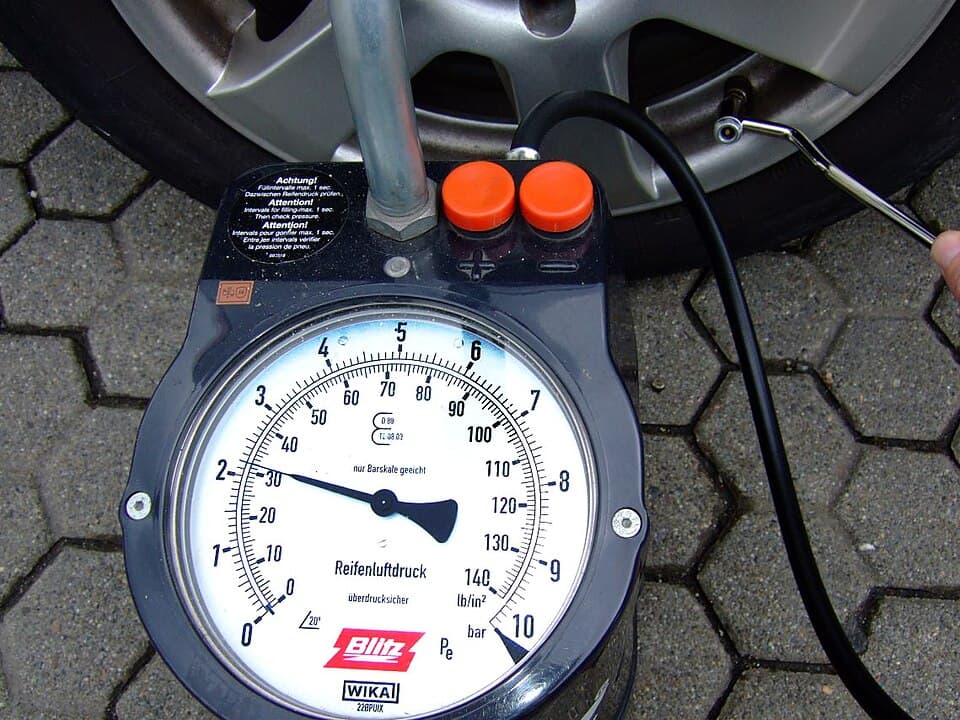
Michelin recommends checking monthly and before a long journey. Prepare a reliable gauge and check whether it displays bar or psi. Ideally measure before driving: a reading after a journey is not directly comparable with the cold specification. Do not deflate a hot tyre to bring it down to that reference. If uncertain, check again when cold.
3. Check all four wheels before using the menu
With the car safely parked, remove the valve cap, seat the gauge correctly and record the reading. Adjust to the specified pressure using suitable equipment, measure again and replace the cap. Repeat on every wheel. A visibly flat tyre, deformation or rapid pressure loss calls for inspection rather than clearing the warning; follow the handbook’s stopping instructions.
4. Reset only when the handbook requires it
Specific example: the consulted Mégane E-Tech handbook, covering 9 February–7 April 2024, requires checking all four tyres cold before resetting the reference. Learning may then take several minutes of driving. Neither the sequence nor its menus are universal: some cars display measured pressures while others use a different system. Resetting adds no air and repairs no leak.
5. The record to keep if the warning returns
Copy this record into your phone: date; cold tyres or after driving; tyre size; intended load; front/rear specification; front-left, front-right, rear-left and rear-right readings; adjustment made; exact warning. Add photographs of the label and dashboard while parked. This helps a professional distinguish recurring loss at one wheel from a display problem. A recurring warning needs investigation rather than repeated resets.
Calculate my euro charging budget
Sources and approach
AtlasVolt editorial synthesis based on the linked sources. These recommendations are not presented as a road test. Model prices come from the manufacturer records linked on each reference page.
- Michelin · gonflage et contrôle à froid
- Renault · Mégane E-Tech, surveillance et réinitialisation (notice 2024)
- Tire Industry Association · pression et étiquette constructeur